

Table of Contents
- Why Wool Apparel Outperforms in Cold Climates
- Moisture-Wicking and Temperature Regulation in Wool
- Merino Wool vs Synthetic Base Layers: Which Works Better
- How to Layer Clothing for Winter: Building Your Cold-Weather System
- Odor Resistance and Natural Hygiene Benefits
- Caring for Wool Apparel: Maintenance and Durability
- Wool Weight and Fiber Diameter: Choosing the Right Thickness
- Sustainability and Cost-Per-Wear Value
- Frequently Asked Questions
Last Updated: September 20, 2026
Why Wool Apparel Outperforms in Cold Climates
When winter temperatures drop across Michigan, wool apparel winter delivers genuine performance in freezing conditions through properties refined over millennia. Residents who understand wool's science invest in quality pieces worn for years, while those relying on cheaper synthetics often replace garments annually.
Wool naturally traps air in microscopic pockets, creating insulation that works even when damp, critical in Michigan's variable conditions. Merino wool excels because its finer fibers make garments softer while maintaining superior thermal properties. Lanolin naturally present in wool fibers repels moisture while allowing vapor to escape, preventing the clammy feeling that plagues synthetic base layers.
Pros of wool apparel:
- Maintains warmth when wet, unlike most synthetics
- Naturally regulates body temperature across varying activity levels
- Resists odor buildup, reducing washing frequency
- Biodegradable and sustainably sourced when ethically produced
Cons of wool apparel:
- Higher upfront cost than synthetic alternatives
- Requires specific care instructions to prevent shrinking
- Can feel itchy if fiber diameter exceeds 25 microns
- Takes longer to dry than some technical synthetics
A quality wool sweater worn through three Michigan winters outlasts five synthetic alternatives, making cost-per-wear heavily favor natural fibers.
Moisture-Wicking and Temperature Regulation in Wool
Wool fibers absorb moisture vapor from skin without feeling wet, holding up to 30% of their weight in water while remaining dry to the touch. This hygroscopic property pulls sweat away and disperses it through the fabric, preventing heat loss that occurs when moisture sits against skin.
The crimp structure in wool fibers traps air in layers. When body heat rises, wool allows warm air to escape gradually; when temperature drops, trapped air prevents heat loss. A merino wool base layer handles both active skiing warmth and lodge chill.
Merino wool typically measures 15-25 microns, allowing faster moisture transport than coarser varieties. Finer fibers mean better temperature regulation without the itchiness of coarser wool.
Merino Wool vs Synthetic Base Layers: Which Works Better
Merino wool excels in odor resistance and moisture management, while synthetics offer faster drying and lower initial cost. The choice depends on activity level and care tolerance.
Merino wool base layers maintain freshness through lanolin's natural antimicrobial properties, allowing multiple wears before washing. Some users wear the same layer for a week of backcountry skiing without odor. Synthetic base layers require washing after two or three wears.
Synthetic fibers dry faster than wool (hours vs. overnight), but this advantage shrinks when factoring in washing frequency. If merino requires half as many washes, total seasonal drying time may favor wool.
Merino wool strengths:
- Superior odor resistance extends wear between washes
- Better temperature regulation across activity levels
- Naturally soft even at fine thicknesses
- Biodegradable and renewable resource
Merino wool limitations:
- Slower drying time requires planning
- Higher cost per garment (typically $80-150 for quality base layer)
- Requires gentle washing to prevent pilling
- Less durable in high-friction areas like underarms
Synthetic base layer strengths:
- Rapid drying enables frequent washing
- Lower upfront cost (often $30-60)
- Greater abrasion resistance in high-wear zones
- Easier care with standard machine washing
Synthetic base layer limitations:
- Odor builds quickly, requiring frequent washing
- Temperature regulation less responsive to activity changes
- Static electricity issues in dry winter air
- Petroleum-based, non-biodegradable material
Merino wool wins for backcountry use and extended trips; synthetics work better for frequent washing scenarios.
How to Layer Clothing for Winter: Building Your Cold-Weather System
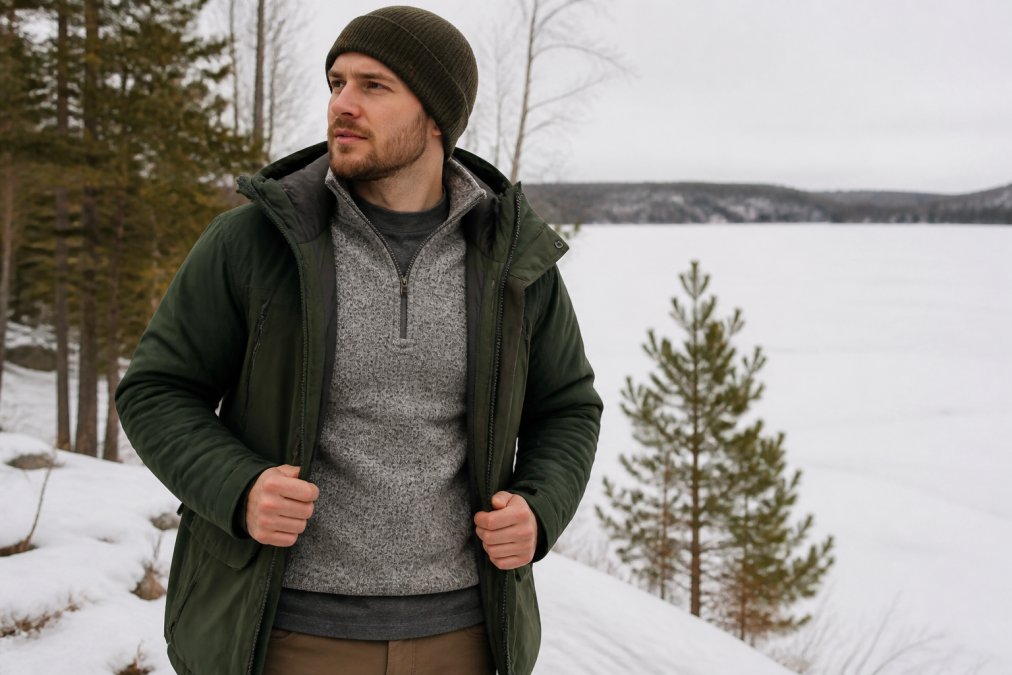
The three-layer strategy, base, mid, and outer, works because each layer handles different functions: moisture transport, insulation, and weather protection.
Your base layer must prioritize moisture transport. Merino wool base layers pull sweat away while maintaining insulation. Fit snugly without restricting movement. Lightweight merino (under 200 GSM) works for active pursuits; midweight (200-300 GSM) suits moderate activity in deep cold.
The mid-layer provides insulation by trapping air. Wool sweaters offer continued temperature regulation even if damp, outperforming synthetic fleece in Michigan's variable conditions.
Your outer layer blocks wind and sheds precipitation while remaining breathable to allow vapor escape. A wool-blend jacket or technical shell works; ensure adequate ventilation.
Spacing between layers matters, tight layering reduces insulating air pockets. Aim for comfortable fit without compression.
Odor Resistance and Natural Hygiene Benefits
Lanolin, a waxy substance coating wool fibers, creates an inhospitable environment for odor-causing bacteria. A merino wool garment worn for a week generates minimal odor, while synthetic base layers develop noticeable smell after two or three wears.
For winter travel with limited laundry access, merino wool reduces packing needs. A single merino base layer rotates through multiple days while remaining fresh.
The hygiene benefit extends beyond odor. Wool's natural properties mean fewer bacteria colonies develop on the fabric, reducing the need for frequent hot-water washing that degrades synthetic fibers. This translates to longer garment lifespan and less environmental impact from washing.
However, odor resistance has limits. After extended wear in high-moisture conditions (heavy sweating in a warm cabin), even merino develops odor. The advantage is measured in days of extended wear, not indefinite freshness.
Caring for Wool Apparel: Maintenance and Durability
Wool apparel winter requires specific care to maintain its properties and appearance, but the process is simpler than many assume. The key principle: avoid agitation, heat, and harsh detergents that damage fiber structure.
Machine washing wool requires a gentle cycle with cold water (maximum 30°C or 86°F) and wool-specific detergent that won't strip lanolin. Standard laundry detergent contains surfactants that remove the protective coating, reducing odor resistance and softness. A wool-specific detergent costs slightly more but extends garment life significantly.
Drying wool demands patience. Never use high heat, which causes fibers to felt and shrink. Lay garments flat to dry or hang them in a well-ventilated area. Merino wool typically dries within 24 hours when laid flat. This slower drying is actually an advantage, it prevents the damage that rapid heat causes.
Pilling (those small fabric balls that form on the surface) happens with all fibers but appears more visible on wool. This is cosmetic rather than a sign of damage. A fabric comb or pill remover restores appearance without harming the garment. Pilling typically stops after several wears as loose fibers are removed.
Storage matters for off-season items. Clean wool thoroughly before storing, as moths and other insects target dirty fibers. Cedar blocks or lavender sachets provide natural protection without the chemical smell of mothballs. Store in breathable cotton bags rather than plastic, which traps moisture.
Wool Weight and Fiber Diameter: Choosing the Right Thickness
Wool weight, measured in grams per square meter (GSM), directly determines how much insulation a garment provides. Understanding this metric helps you select appropriate layers for Michigan's variable winter conditions.
Lightweight merino wool (150-200 GSM) works as a base layer or mid-layer for active pursuits. This weight provides insulation without bulk and dries relatively quickly. A lightweight merino base layer weighs almost nothing in your pack, making it ideal for travelers and backcountry users who need to minimize weight.
Midweight wool (200-300 GSM) serves as a versatile mid-layer for most winter activities. This thickness provides substantial insulation while remaining packable.
| Wool Type | Weight (GSM) | Fiber Diameter (microns) | Best Use |
|---|---|---|---|
| Lightweight merino | 150-200 | 15-20 | Base layer, active use |
| Midweight merino | 200-300 | 18-22 | Mid-layer, versatile insulation |
| Heavyweight merino | 300+ | 20-25 | Outer sweater, static activities |
| Standard wool | 250-400 | 25-35 | Work garments, less comfort |
Sustainability and Cost-Per-Wear Value
Wool apparel delivers environmental benefits that extend beyond the manufacturing process. Wool is biodegradable, returning to soil within months to years depending on conditions. Synthetic polyester base layers persist in landfills for decades, creating lasting environmental impact even after disposal.
Frequently Asked Questions
Is wool apparel really good for winter, or does it just feel heavy?
Wool apparel excels in winter because it regulates body temperature, wicks moisture away from skin, and retains warmth even when damp, unlike synthetic fibers. Merino wool is especially lightweight and breathable, making it comfortable for active cold-weather use. The key is choosing the right weight for your activity level. Fine merino (15-20 microns) feels soft against skin, while thicker wool (25+ microns) provides maximum insulation for stationary outdoor work.
What's the real difference between merino wool and synthetic base layers?
Merino wool naturally regulates temperature, resists odor for days between washes, and feels less itchy than traditional wool. Synthetic fibers dry faster but retain odors and require more frequent washing. For Michigan winters, merino wool's moisture-wicking and temperature regulation make it superior for layering systems, especially if you're active outdoors. However, synthetics cost less and work fine for casual wear under heavy jackets.
How do I know if I'm layering correctly for winter?
Start with a moisture-wicking base layer (merino wool or synthetic), add an insulating mid-layer (wool sweater or fleece), and finish with a wind-resistant outer shell. The base layer pulls sweat away from skin, the mid-layer traps body heat, and the outer layer blocks wind and moisture. If you feel cold after 15 minutes of activity, add bulk to the mid-layer rather than the base. If you overheat, remove the outer layer first to prevent sweat buildup.
Will wool apparel actually save money compared to buying cheap synthetic alternatives?
Yes, over time. Quality wool pieces last 5-10 years with proper care, while synthetic base layers degrade after 1-2 years of regular use. A $60 merino wool base layer worn twice weekly for 5 years costs about $0.23 per wear. A $20 synthetic alternative lasting 1.5 years costs about $0.13 per wear initially, but you'll replace it 3-4 times, totaling $60-80 and more landfill waste. Wool's durability and performance justify the upfront investment, especially for serious outdoor enthusiasts.