

Table of Contents
- How We Evaluated Boots for Michigan Terrain
- Key Features to Consider in Michigan Hiking Boots
- Waterproof Hiking Boots for Wet Trails
- How to Break In New Hiking Boots Before Your First Trail
- Seasonal Transition Footwear for Michigan Trails
- Maintaining Your Boots for Humid and Wet Climates
- Frequently Asked Questions
Last Updated: September 14, 2026
How We Evaluated Boots for Michigan Terrain
Michigan hiking boots have to survive conditions that national gear reviews rarely test: sugar sand along Lake Michigan dunes, clay-heavy mud in the Waterloo-Pinckney trail network, slickrooted singletrack in the Huron-Manistee National Forest, and humidity that soaks through a boot from the inside out. This guide from Northern Michigan Fanatics Club breaks down what actually matters when you're choosing footwear for the best hiking boots for Michigan terrain review, based on the conditions local trails throw at you from April through November.
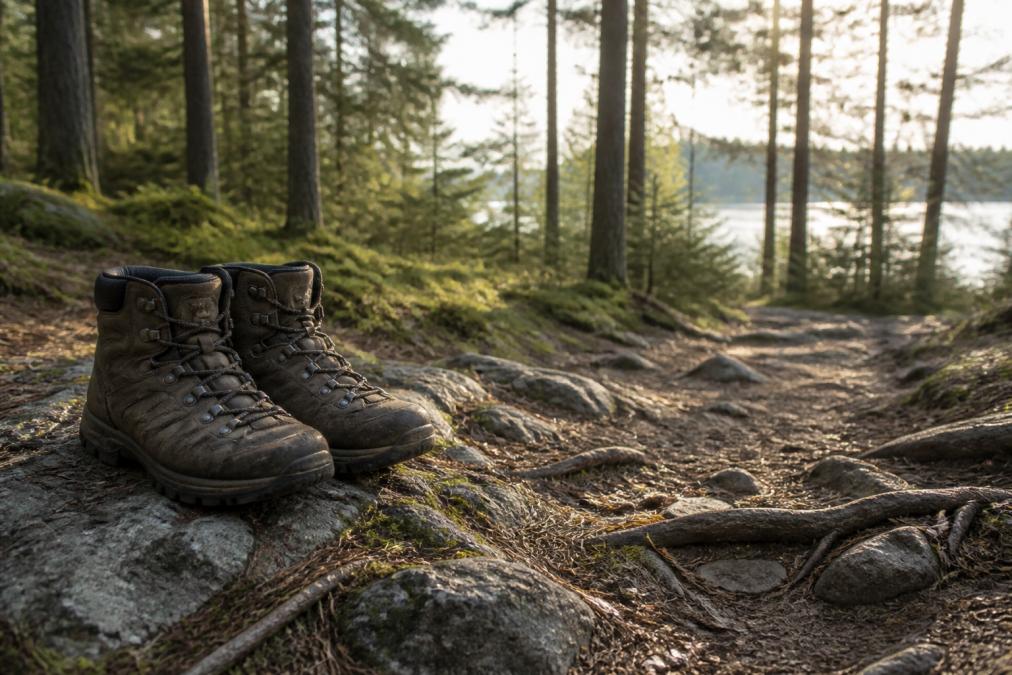
Traction and Outsole Performance
Michigan's trails shift underfoot constantly. A lug pattern with 4-5mm depth and a rubber compound rated for wet rock handles the sandstone ledges near Pictured Rocks and the muddy climbs in the Porcupine Mountains. Shallow, hard-rubber outsoles skate on wet roots, which is the single most common slip hazard on Lower Peninsula trails.
Waterproofing and Breathability
A waterproof membrane keeps spring runoff out, but it traps sweat during humid July hikes. Full-grain leather resists water longer than synthetic uppers but takes longer to dry. The compromise most Michigan hikers land on: a waterproof boot for shoulder seasons and a breathable synthetic option for summer. The U.S. Forest Service guide to trail conditions notes that wet-season trail surfaces stay saturated much longer in the Upper Midwest than in drier regions.
Key Features to Consider in Michigan Hiking Boots
Five features decide whether a boot works here: ankle support, torsional rigidity, heel lock, arch support, and overall weight. But the way those features interact with Michigan terrain is what separates a boot that survives a season from one that quits in July. Below is how each feature plays out against the specific surfaces you'll actually walk on.
Support, Stability, and Ankle Protection
A reinforced toe cap and a stiff shank protect against the rock gardens common on Upper Peninsula trails, but the more common Michigan hazard is lateral roll on root ladders and off-camber clay. Mid-height boots give ankle support without the bulk of a full mountaineering boot. If you're carrying a loaded pack for an overnight on Isle Royale, torsional rigidity matters more than cushioning, a boot that twists under a 35-pound pack on wet bedrock is an ankle injury waiting to happen.

Pay attention to the heel counter. A firm, molded heel counter locks the rear of the foot and stops the slide that causes blisters on sandy downhills at Sleeping Bear Dunes. A soft, collapsible heel counter feels great in the store and fails on the third mile of a dune descent.
Traction and Outsole Compound
Michigan trails shift underfoot constantly, and the outsole has to handle three surfaces that demand different things:
- Sugar sand (Lake Michigan dunes, Nordhouse Dunes Wilderness): wide, shallow lugs float better than narrow, deep ones, which dig in and pack with sand.
- Clay-heavy mud (Waterloo-Pinckney, Pinckney Recreation Area): deep 4-5mm lugs with wide spacing shed mud instead of suction-cupping it.
- Wet sandstone and roots (Pictured Rocks, Porcupine Mountains, Huron-Manistee): a soft, sticky rubber compound grips wet rock; a hard, durable compound skates. This is the single most common slip hazard on Lower Peninsula singletrack.
No single outsole excels at all three. The realistic compromise for a three-season Michigan boot is a medium-soft rubber compound with 4-5mm lugs and moderate spacing, good enough on sand, good enough on mud, and reliable on wet rock.
Waterproofing and Breathability Trade-Off
A waterproof membrane keeps spring runoff out, but it traps sweat during humid July hikes. Full-grain leather resists water longer than synthetic uppers but takes longer to dry once it's soaked through. The compromise most Michigan hikers land on: a waterproof boot for shoulder seasons and a breathable synthetic option for summer. The U.S. Forest Service guide to trail conditions notes that wet-season trail surfaces stay saturated much longer in the Upper Midwest than in drier regions, which means a boot that dries overnight matters as much as one that keeps water out.
Weight, Cushioning, and Long-Distance Comfort
Weight-to-performance ratio is the tradeoff nobody escapes. A lighter boot reduces fatigue on 10-mile days but sacrifices durability. A moisture-wicking footbed and a midsole with decent shock absorption make the difference on long-distance comfort, especially when the trail turns sandy and every step slides. As a rough rule, a men's mid-height boot under 2 pounds per boot and a women's under 1 pound 12 ounces keeps fatigue manageable on Michigan's longer day hikes without giving up too much underfoot protection.
Sizing, Fit, and Heel Lock
Michigan's humidity makes feet swell more than dry-climate hikers expect. Size for the end of the day, not the morning: try boots on in the afternoon, with the socks you'll actually hike in, and leave a thumb's width between your longest toe and the front of the boot. A heel-lock lacing pattern, extra eyelets near the ankle, laced tight, eliminates the heel slip that causes most break-in blisters.
Break-In Reality
| Feature | What to Look For | Why It Matters in Michigan |
|---|---|---|
| Traction | 4-5mm lugs, soft rubber, moderate spacing | Wet roots, clay mud, sugar sand |
| Waterproofing | Membrane or full-grain leather | Spring runoff, humidity |
| Ankle support | Mid-height, firm heel counter | Root ladders, off-camber clay |
| Weight | Under 2 lbs per boot (men's) | Long-distance comfort |
| Break-in | 10-15 miles | Blister prevention |
| Fit | Afternoon sizing, heel-lock lacing | Humidity-driven foot swell |
Waterproof Hiking Boots for Wet Trails
Waterproof hiking boots for wet trails are the right call for three seasons here, but they need a breathability plan. A waterproof membrane works until it doesn't: once water tops the collar, the boot holds it in. Gaiters help on muddy sections, and gaiter compatibility is worth checking before you buy.
What "Waterproof" Actually Means
Most waterproof hiking boots use one of three constructions:
- A laminated membrane (the most common approach), a thin, porous PTFE or PU layer bonded inside the upper. It blocks liquid water while letting vapor escape, but the membrane only works if the outer fabric isn't saturated.
- Full-grain leather with a treatment, naturally water-resistant, durable, and repairable, but heavy and slow to dry once soaked.
- A waterproof/breathable bootie stitched inside a synthetic upper, lighter and cheaper, but the bootie can delaminate over years of flexing.
All three rely on a durable water repellent (DWR) finish on the outer fabric to bead water. DWR wears off. When the outer fabric starts wetting out, looking dark and saturated instead of beading, the membrane is still waterproof, but the boot feels cold, heavy, and clammy because vapor can't escape through the soaked outer layer. Reapplying a spray-on or wash-in DWR treatment restores the beading.
The Breathability Problem in Humid Summers
A waterproof membrane is a one-way valve that works best when the humidity gradient across it is steep. In a humid Michigan July, the air outside the boot is already near saturation, so sweat vapor has nowhere to go. The result: wet feet on a dry trail, which feels like a waterproofing failure but is actually a breathability failure.
The fix is a system, not a boot:
- Merino wool or synthetic socks, never cotton. Wool moves moisture away from skin and stays warm when damp.
- A liner sock under a thicker hiking sock in humid months adds a friction layer that reduces blisters.
- Vented or mesh-paneled uppers for summer day hikes, reserving fully waterproof boots for shoulder seasons and wet forecasts.
- Boot dryers or newspaper stuffing overnight so the membrane isn't fighting residual moisture the next morning.
Water Crossing and Collar Height
Michigan's northern trails, especially in the Huron-Manistee National Forest and the Porcupine Mountains, have frequent low water crossings and boggy sections. A waterproof boot keeps you dry only up to the collar. Above that, the boot becomes a bucket. If your route includes knee-deep crossings, either plan on wet feet or bring a lightweight camp shoe to change into. Mid-height boots handle ankle-deep mud and splash; low-cut boots don't.
Drying Behavior Matters More Than You Think
A boot that keeps water out but takes two days to dry is a liability on a multi-day trip. Full-grain leather dries slowest; synthetic uppers with a membrane dry fastest; nubuck and split-grain leather sit in between. On a wet weekend, a synthetic boot that dries overnight beats a leather boot that's still damp on day two, even if the leather boot is more waterproof on day one.
When to Skip Waterproofing Entirely
For fast day hikes in July and August, a non-waterproof, highly breathable boot or trail shoe is often the better choice. It drains and dries faster, weighs less, and lets sweat escape. Save the waterproof membrane for spring mud, fall rain, and any trip where wet feet would end the day early.
How to Break In New Hiking Boots Before Your First Trail
Learning how to break in new hiking boots takes about 10-15 miles of walking, spread over a week. Start with short neighborhood walks, then add a loaded daypack, then hit a flat local trail before anything technical.
- Wear them indoors for two hours to check heel lock
- Walk one mile on pavement
- Walk three miles with your normal pack weight
- Do a short, flat trail hike
- Take a full day hike before an overnight
Seasonal Transition Footwear for Michigan Trails
Michigan's shoulder seasons break the one-boot rule. Late March and November bring freeze-thaw cycles that turn trails into mud and ice, and no single boot handles both well. A waterproof mid-height boot with a grippy outsole covers most of the transition, and a pair of traction devices handles the icy mornings. The National Weather Service climate data shows how quickly northern Michigan trail conditions swing between frozen and muddy in spring.
Maintaining Your Boots for Humid and Wet Climates
Humid, wet climates destroy boots faster than dry ones, mostly through mildew and midsole breakdown. Rinse mud off with cool water, never a hose at full pressure, and dry them at room temperature away from direct heat. Stuff them with newspaper to pull moisture from the inside.
| Problem | Fix | Frequency |
|---|---|---|
| Mud and grit | Cool water rinse, soft brush | After every hike |
| Mildew smell | Air-dry, baking soda | Weekly in humid months |
| Worn lugs | Replace or resole | Check monthly |
| Cracked leather | Conditioner | Every 2-3 months |
For a day on the trail, a 14oz stainless travel mug from Northern Michigan Fanatics Club keeps coffee hot through a long morning, and their $35 trail-inspired tees are built for the drive home. Members get exclusive discounts and a shot at a Northern Michigan vacation through the VIP club.

Frequently Asked Questions
What features should I look for in hiking boots for sandy trails?
Focus on a deep, multi-directional lug pattern that sheds sand instead of packing it, plus a midsole stiff enough to spread your weight across loose ground. A gusseted tongue keeps grit out, and a slightly higher ankle collar helps on dunes like those near Sleeping Bear. Synthetic uppers dry faster than full-grain leather when you cross a wet beach.
Are waterproof boots necessary for hiking in the Great Lakes region?
For most Michigan trails, yes. Spring runoff, morning dew, and sudden rain mean wet feet are common even on short hikes. A waterproof membrane keeps water out, but it also traps sweat, so pair it with moisture-wicking socks. In peak summer, some hikers switch to breathable non-waterproof boots for better airflow on dry, sandy routes.
How do I choose between hiking boots and trail runners for forest terrain?
Boots win on root-heavy, uneven ground where ankle support and torsional rigidity matter. Trail runners are lighter and dry faster, which helps on smooth, well-maintained paths. If your Michigan hiking involves rocky shorelines, muddy sections, or long days with a loaded pack, boots offer more protection and stability over miles.
How long does it take to break in new hiking boots?
Most leather and synthetic boots need 10 to 20 miles of walking before they feel truly comfortable. Start with short walks on pavement or easy trails, then add distance and weight gradually. Wear the socks you plan to hike in, and stop if you feel hot spots forming. Proper break-in prevents blisters on your first big trail day.
Do I need ankle support for day hikes in Northern landscapes?
It depends on the terrain. Root-covered trails, rocky scrambles, and steep descents benefit from mid or high-cut boots that limit ankle roll. On flat, sandy paths or boardwalk-style trails, a low-cut boot or trail runner is often enough. If you have weak ankles or carry a heavier pack, choose more support.
Michigan trails punish the wrong boot choice, and the right one makes every mile easier. Northern Michigan Fanatics Club celebrates the people who hike these trails, and our VIP club backs that up with exclusive apparel discounts, member giveaways, and a chance to win a Northern Michigan vacation. Get started with Northern Michigan Fanatics Club and gear up for the trails you love.